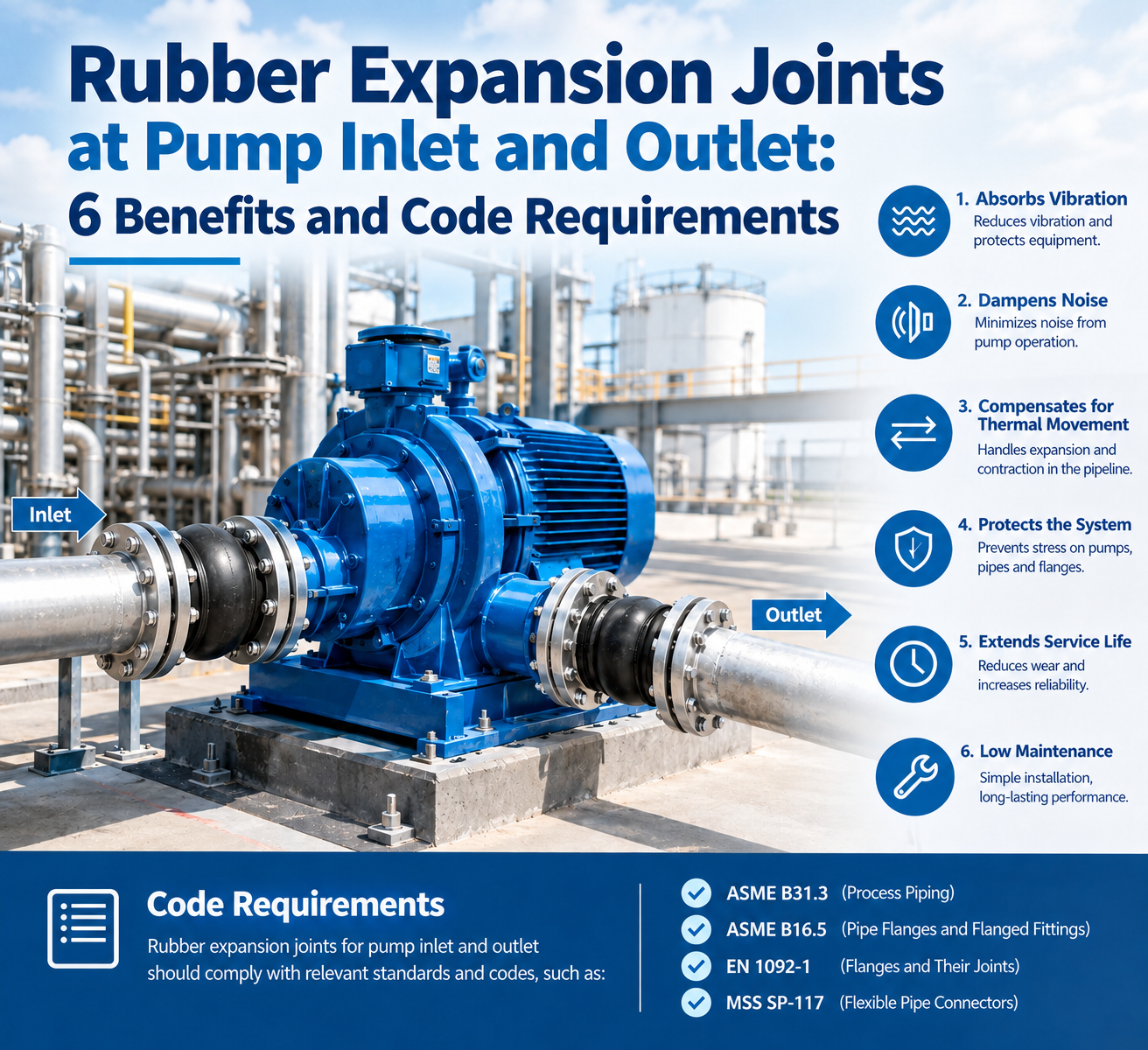
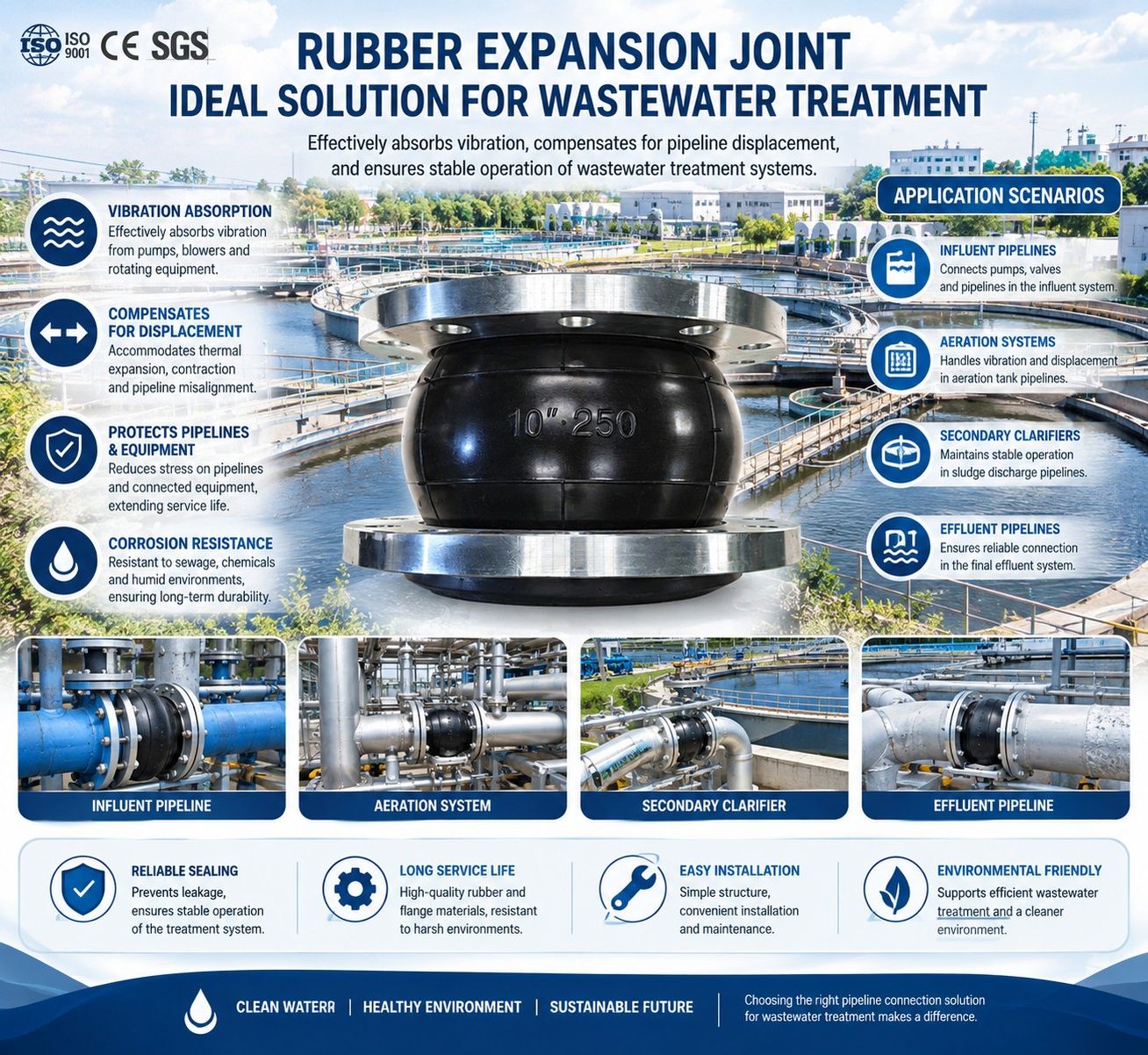
Rubber Expansion Joints at Pump Inlet and Outlet: 6 Benefits and Code Requirements
Industry News | Pump Piping and Fluid Handling A pump may be the heart of a water, HVAC, industrial, or process system, but the connected piping determines how reliably it operates. Rubber expansion joints at pump inlet and outlet connections can help manage vibration, thermal movement, minor settlement, and piping stress when correctly selected and installed. These flexible connectors are not alignment tools or pipe supports. Their pressure, vacuum, temperature, movement, and media ratings must match the actual service. The suction and discharge sides should always be evaluated separately. Six Benefits of Rubber Expansion Joints at Pump Inlet and Outlet Vibration Isolation A rubber expansion joint can reduce the transmission of pump vibration into the pipeline, supports, and building structure. This may help limit noise, fastener loosening, weld fatigue, and stress at pump nozzles. Pump alignment, baseplate stiffness, and pipe supports remain essential parts of the vibration-control design. Reduced Nozzle Loads and Piping Stress A correctly specified joint can accommodate limited axial, lateral, and angular movement, reducing the transfer of certain piping forces to the pump connection. Its movement limits and spring characteristics must be checked by the piping engineer. Flanges must be aligned before installation; the joint must...