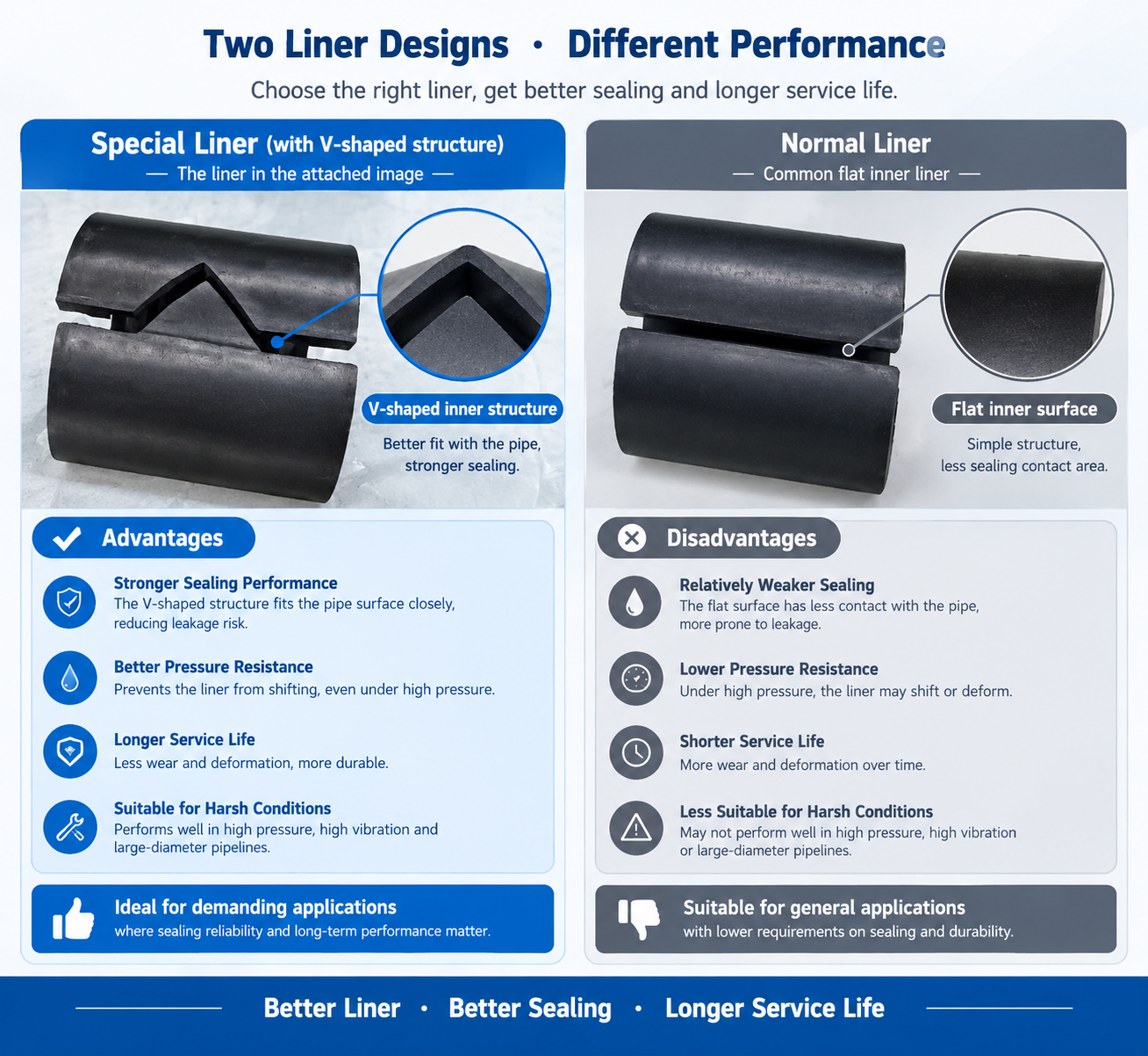
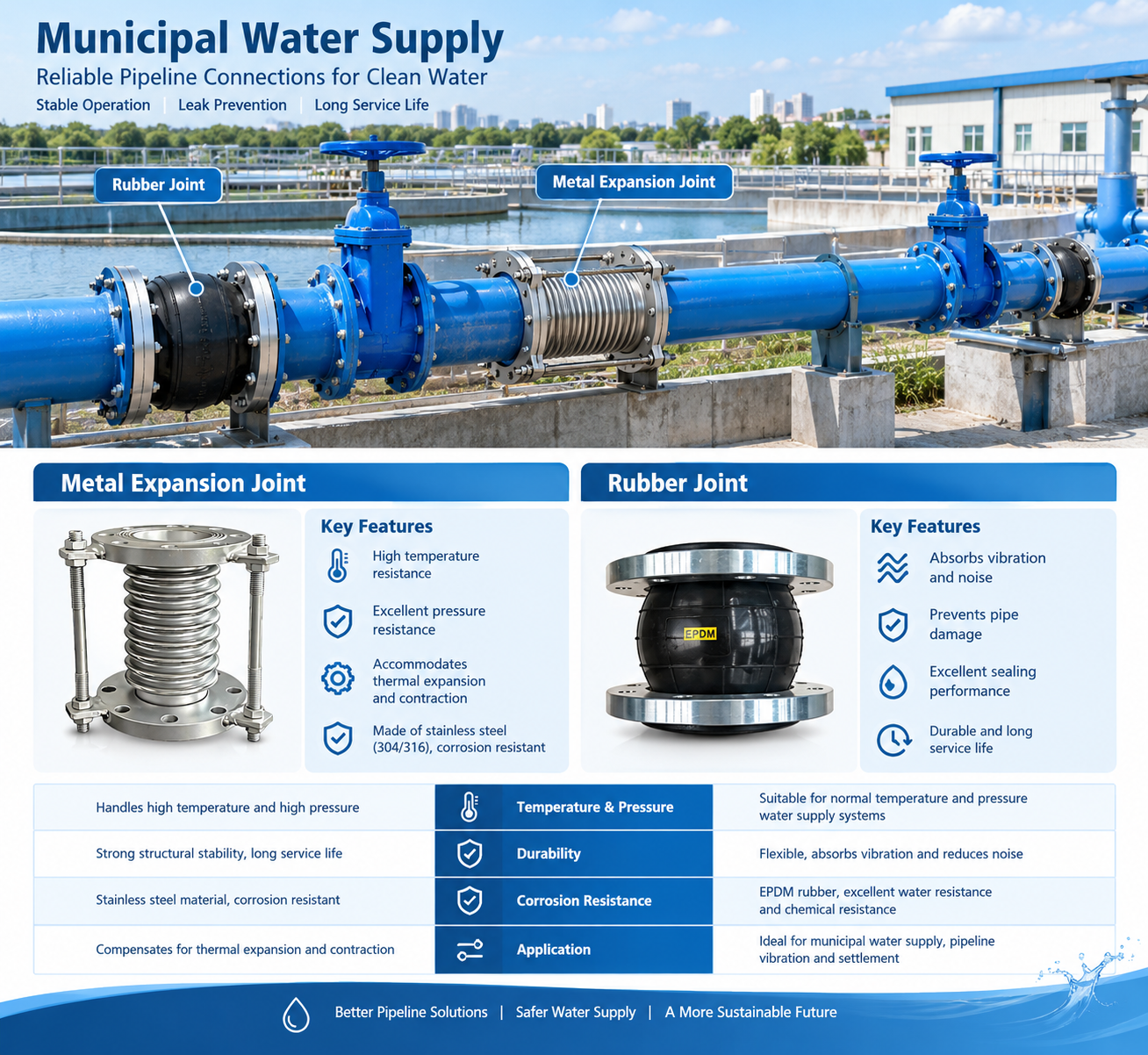
Rubber Expansion Joint Installation: 10 Essential Precautions
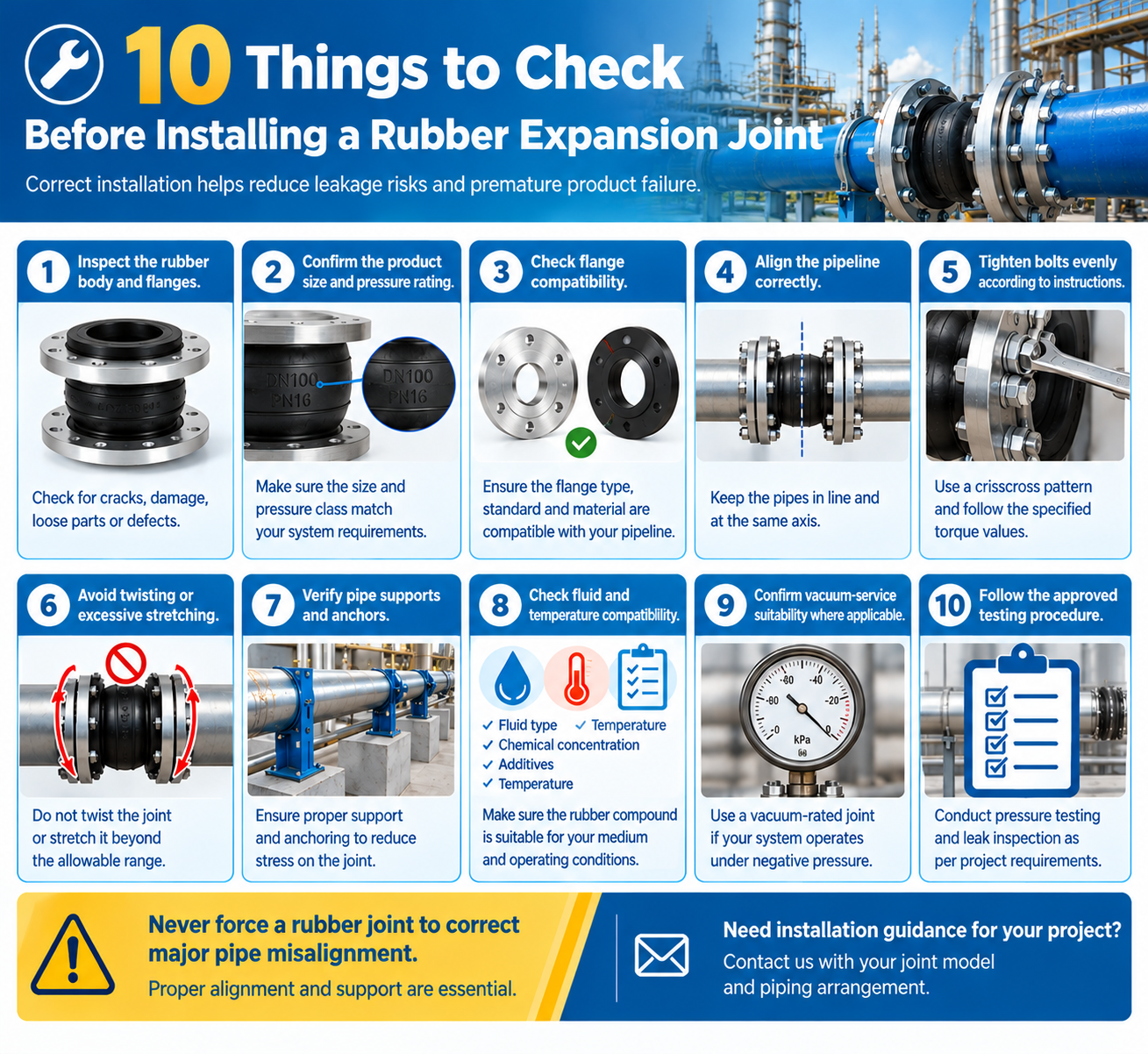
1. Introduction Correct installation is essential to the performance and service life of a rubber expansion joint. Improper alignment, excessive movement, unsuitable fasteners, or inadequate pipe supports can cause leakage, deformation, or premature failure. 2. Check the Product Before Installation Inspect the rubber body, reinforcement area where visible, flanges, bolt holes, and sealing surfaces. Confirm that the product model, nominal diameter, pressure rating, material, and connection dimensions match the approved specification. Do not install a unit with visible cuts, cracks, exposed reinforcement, damaged flanges, or other defects. 3. Verify Flange Compatibility Confirm the mating flange dimensions, facing, bolt-hole pattern, and applicable flange standard. Ensure that the sealing faces are clean and free of debris, excessive corrosion, and damage. A dimensional mismatch can cause uneven compression and leakage. 4. Align the Pipeline The mating pipes should be aligned within the installation tolerances specified for the product. Do not use the rubber expansion joint to pull misaligned pipes into position. Correct the pipe alignment and support arrangement before tightening the connection. 5. Use the Correct Bolts and Tightening Procedure Use fasteners that meet the project specification. Tighten bolts progressively and evenly in a crosswise sequence where appropriate for the flange arrangement. Follow...